

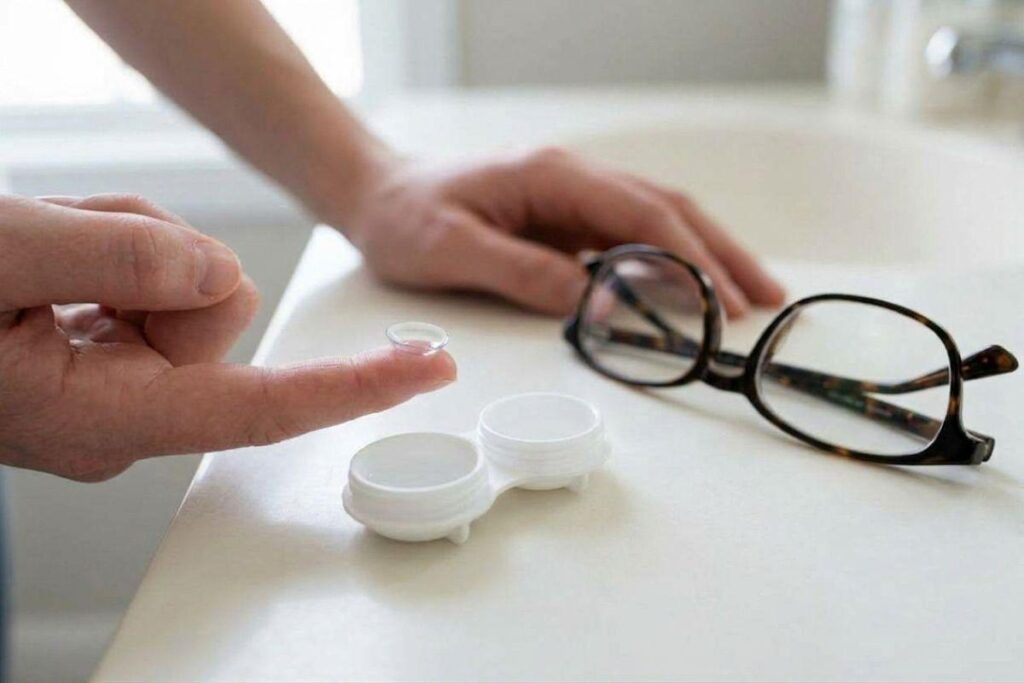
Contact lenses are easy to forget about, and that’s part of what makes them comfortable to wear. They settle in, you stop noticing them, and the evening slips by. That same comfort is why so many people end up asleep with their lenses still in.
Sleeping in your contact lenses isn’t safe as a regular habit, and even a single night can raise your risk of an eye infection. It’s one of the first things we cover during contact lens exams and fittings.
What Happens to Your Eyes When You Sleep in Contacts
Your cornea is one of the few parts of your body that doesn’t get oxygen from blood vessels. It pulls oxygen straight from the air instead.
Close your eyes for 8 hours, and that supply drops sharply. Put a lens on top of the cornea and even less gets through.
A cornea running low on oxygen can swell slightly and hold onto fluid. You might wake up with eyes that feel gritty, look red, or sting when you blink. Tear film also slows down overnight, so debris that would normally rinse away stays put under the lens.
The Risks That Build Up Overnight
Bacteria are the bigger worry. A lens holds them against the surface of your eye, and the warm, closed space behind your eyelid gives them room to multiply while you sleep.
Overnight wear has been linked to an infection risk up to 8 times higher than wearing lenses only during the day. Microbial keratitis, an infection of the cornea, can develop fast and can be difficult to treat. Corneal ulcers sometimes follow, and they can leave scarring that affects vision.
Signs Something May Be Wrong After Sleeping in Contacts
Most people notice something is off within a few minutes of waking up. Watch for any of these:
- Eye pain or aching that doesn’t fade
- Redness spreading across the white of your eye
- Sensitivity to light
- Blurry vision or watery eyes
- Discharge, or a scratchy feeling when you blink
Ongoing dryness and irritation in lenses can also point to contact lens intolerance, which your optometrist can sort out with a few small adjustments to material or wear schedule.
What to Do If You Accidentally Fall Asleep in Your Contacts
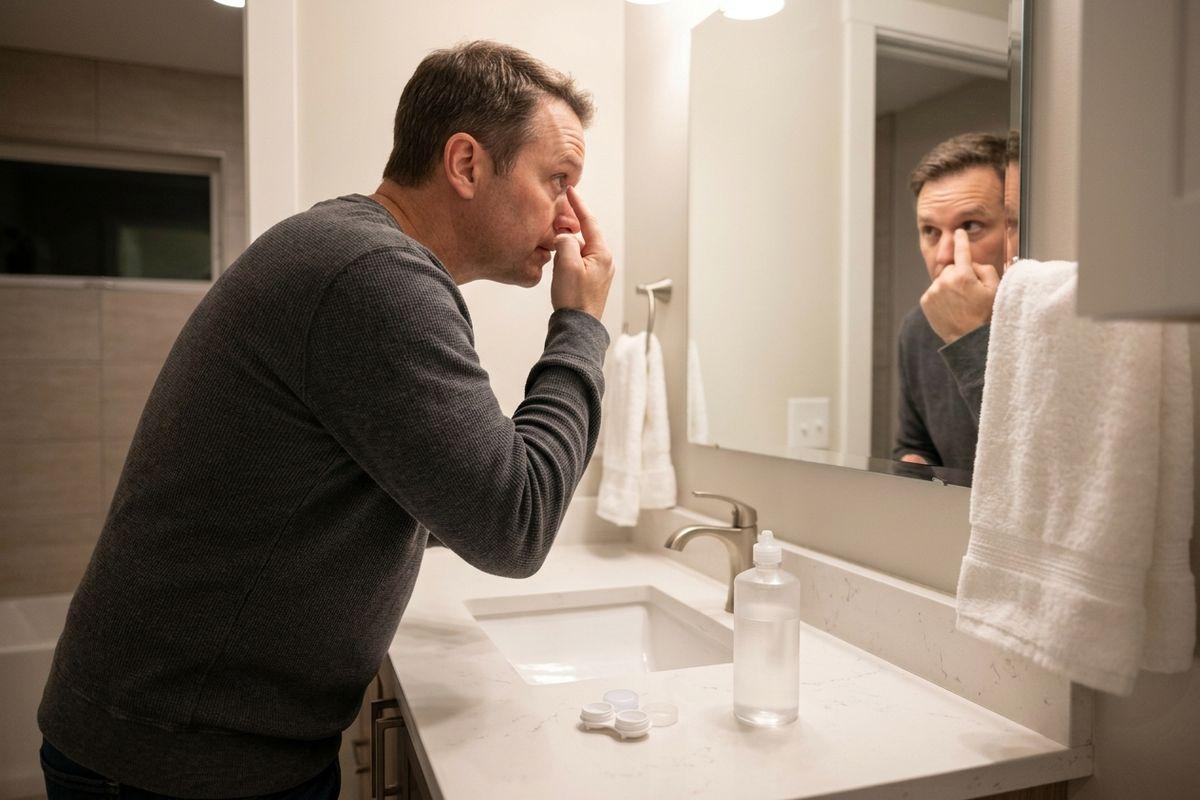
Don’t try to pull your lenses out the moment you wake up. Forcing it can cause real damage. Follow these steps instead:
- Add rewetting or lubricating drops and wait a minute or 2.
- Blink slowly until you feel the lens move freely on your eye.
- Slide the lens down toward the white of your eye and pinch it out gently.
- Switch to glasses for the rest of the day and give your cornea a break.
Throw disposable lenses away rather than putting them back in later. If a lens won’t budge after a few rounds of drops, stop and call us instead of forcing it.
When to Call Your Optometrist
One accidental night usually doesn’t require an urgent visit. But don’t wait it out if you experience any of the following:
- Symptoms that last more than a day after removing the lenses
- Pain, discharge, or redness that gets worse instead of better
- Any concern that an infection may have started
Bring the lenses and the case with you if you can. Both give your optometrist useful information about what happened.
Contact Lenses Made for Overnight Wear
Some lenses are FDA-approved for sleeping in. Extended wear lenses use materials that let more oxygen reach the cornea, and they’re cleared for 7 or 30 consecutive nights depending on the brand.
Ortho-K lenses work differently. You wear them overnight to gently reshape the cornea, then go through the day without lenses, which is one reason they show up in myopia management for kids.
Both call for a proper fitting and regular follow-up visits. Corneal shape, astigmatism, and dry eye all affect whether overnight wear makes sense for you, and some eyes are harder to fit than others. Approval for overnight wear also applies to a specific lens, not contacts in general, so your current pair may not qualify.
A Note on Naps
A 20-minute nap carries the same oxygen deprivation and bacterial risks as a full night of sleep in lenses. The length of the nap doesn’t change the biology. If there’s any chance you might doze off, take your contacts out first.
Healthy Contact Lens Habits Worth Building
Small habits make a real difference over time. Removing your contacts before you wind down for bed is one of the most straightforward things you can do for your eye health.
Scrolling in a dim room dries your eyes out faster, and blue light at that hour can change when your body expects to wind down. Screen-related dryness and fatigue have their own set of fixes.
The rest comes down to day-to-day lens care:
- Wash and dry your hands before touching a lens
- Replace your case every 3 months
- Use fresh solution instead of topping off what’s already in the case
- Keep water away from your lenses, including in the shower
- Take your lenses out before you settle in for the evening
Find a Contact Lens That Fits Your Day
The right lens material, replacement schedule, and wear time depend on how your eyes function and how you actually spend your time. A lens that suits your routine is one you’re more likely to wear as designed.
Routine eye exams matter here as well. We use diagnostic technology to detect early changes in eye health, so we can address smaller issues sooner.
Talk to us at Spectrum Eye Care about your lenses, or book an appointment at our South End, Uptown, or South Charlotte office.