

Key Takeaways
- Many eye conditions develop slowly and without obvious symptoms
- Headaches, dry eyes, and trouble focusing are all signs it may be time for an exam
- Sudden floaters or flashes of light deserve prompt attention
- Kids often don’t realize they have a vision problem, so watch for behavioural cues
- Most adults benefit from a comprehensive eye exam every year
Why Eye Exams Matter More Than You Think
You probably don’t think about your eyes until something feels off. But many eye conditions develop slowly and without pain, which means by the time you notice something is wrong, the issue may have been building for months. Routine comprehensive eye exams in Charlotte, NC give your optometry team a chance to spot those changes early, while they’re still much easier to address.
The diagnostic technology used during an eye exam captures detailed images of your eye health, and each visit builds on the last. That ongoing record makes it easier to catch subtle changes as your eyes age, so the vision you rely on every day stays protected for years to come.
7 Signs It’s Time to Schedule an Eye Exam in Charlotte, NC
1. Frequent Headaches, Especially After Screen Time
If your head is pounding by the end of a workday in front of a computer, that’s not just fatigue. Eye strain from extended screen use, sometimes called digital eye strain, can trigger headaches that show up around the temples or behind the eyes.
The strain often builds throughout the day, so you may feel fine in the morning and worn out by mid-afternoon. An exam can identify whether your prescription, screen habits, or both are contributing.
2. Dry, Irritated, or Gritty Eyes
Dry eyes can feel like there’s something stuck in them, even when there isn’t. The discomfort tends to be worse during long stretches of screen time, in dry indoor air, or after a poor night’s sleep. Over-the-counter drops can offer temporary relief, but they don’t address what’s actually causing the problem.
Persistent dryness is one of the more common reasons people book an exam, and it usually responds well to targeted treatment.
3. Trouble Shifting Focus Between Near and Far
If your vision takes a moment to adjust when you look up from your phone to something across the room, that lag is worth noting. Healthy eyes shift focus quickly and without effort.
A noticeable delay can point to a prescription change, eye fatigue, or early signs of conditions like presbyopia. The fix is usually straightforward once it’s diagnosed.
4. Squinting to Read Signs or Fine Print
Squinting is your eyes’ way of compensating for blur. If you’re catching yourself doing it to read street signs while driving, menus at dinner, or text on a screen, your prescription has likely changed.
This is one of the more common reasons adults realize it’s time for an exam, and the change can happen gradually enough that you don’t notice until it’s pronounced.
5. Halos, Glare, or Trouble Seeing at Night
Vision in low light can change for several reasons. Halos around streetlights, harsh glare from oncoming headlights, or difficulty seeing in dim rooms can point to early cataracts, dry eye, or other issues.
These symptoms often show up first while driving at night, when contrast is reduced and pupils are dilated. An exam can identify the cause and suggest options to make night vision more comfortable.
6. Sudden Floaters or Flashes of Light
This one is different from the others. Most people see occasional floaters — those small specks or threads that drift across your vision — and they’re usually harmless. But a sudden increase in floaters, or floaters paired with flashes of light, can signal a retinal tear or detachment. Both need prompt attention.
If you experience this, don’t wait for your next routine exam, call your eye care team right away.
7. Signs of a Vision Problem in Your Child
Kids often don’t realize their vision is off because they assume everyone sees the way they do. Watch for behaviours like sitting very close to screens or books, frequent eye rubbing, complaints of headaches after school, or one eye that turns inward, outward, up, or down (a condition called strabismus).
Nearsightedness, or myopia, is also becoming more common in school-age kids and tends to progress over time. Myopia management can help slow that progression when caught early.
Children’s eyes are still developing, so catching issues sooner gives them more options for treatment and helps their vision develop properly. A pediatric eye exam is the most reliable way to know what’s going on.

How Often Should You Book an Eye Exam?
If you’re trying to think back to your last eye exam and genuinely can’t remember when it was, that’s a sign in itself. Many eye conditions develop without obvious symptoms, which means everything can feel fine right up until it isn’t. A regular exam schedule helps catch those changes before they affect your vision.
Most adults benefit from a comprehensive eye exam annually. That timeline can shift depending on your situation. If you have diabetes, a family history of eye disease, or you wear contact lenses, your eye care team may recommend coming in more frequently. The same goes for kids, especially during the school years when vision can change quickly.
If it’s been longer than two years and nothing’s prompted you to book, now is a good time. An exam is the easiest way to confirm everything looks healthy, or to catch something early if it doesn’t.
Eye Conditions Our Team Treats
Eye exams aren’t only for prescription updates. Many of the conditions we evaluate during a routine visit benefit from ongoing care, and treatment options have come a long way in recent years.
Dry Eye Treatment
Dry eye means more than occasional discomfort. The condition can make reading, screen use, and even driving feel uncomfortable throughout the day. Spectrum Eye Care offers dry eye treatment using evidence-backed methods like iLux thermal pulsation and Equinox low-level light therapy.
After a thorough evaluation, our team will recommend a treatment plan based on what’s actually driving your symptoms. If you’re curious about how these treatments work, we’ve broken down how IPL treats dry eye in another post.
Myopia Management for Kids
Myopia, or nearsightedness, is becoming more common in children, and it tends to progress during the school years. Myopia management focuses on slowing that progression, which can reduce the risk of more serious vision problems later in life.
The earlier we start, the more options your child has. Our team can assess your child’s vision and walk you through approaches that fit their age and daily routine.
Digital Eye Strain & Disease Diagnosis
If screens leave your eyes feeling tired, sore, or dry by afternoon, you may be dealing with digital eye strain. Our team can suggest practical relief strategies, including the 20-20-20 rule, along with any vision corrections that would make screen time more comfortable.
Beyond comfort concerns, regular exams also include monitoring for conditions like glaucoma and macular degeneration. Catching these conditions early gives you the best chance of managing them effectively.
Booking Your Next Eye Exam in Charlotte
Staying on top of your eye health is easier when your care fits into your routine. Spectrum Eye Care has three locations across the city to make regular visits more convenient, with offices in South Charlotte on Colony Road, Uptown Charlotte, and Charlotte’s South End.
Your vision deserves the same ongoing attention you give the rest of your health. If something on this list sounds familiar, or it’s just been a while since your last exam, contact us to book a visit. Our team is ready to help you see more clearly and comfortably.
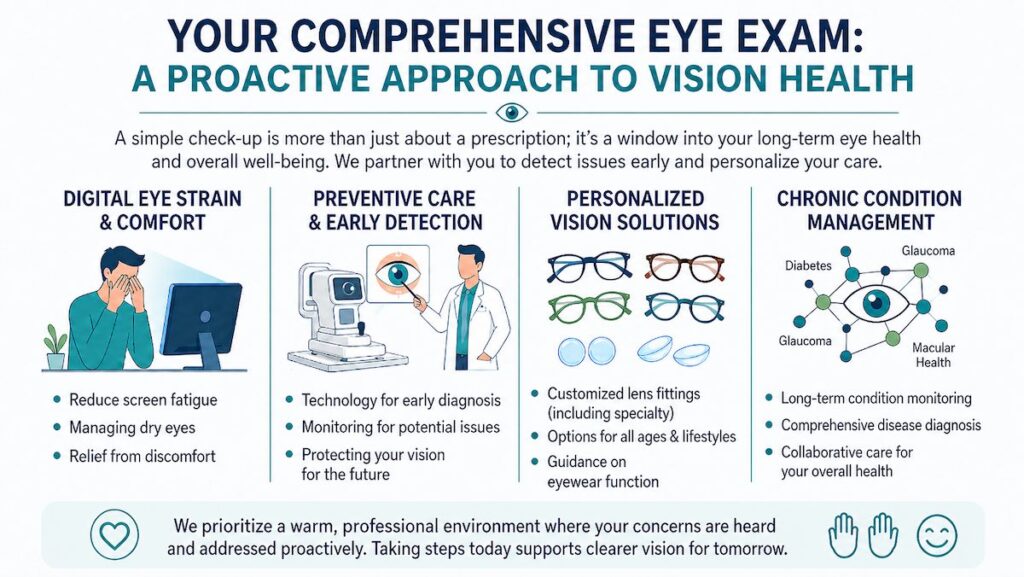
[a]There are two problems with this graphic. First, we aren’t suppossed to use “advanced” in reference to technology. Second, the sentence at the bottom should read “where your concerns are heard and addressED proactively.”